De Tonne 77 · 9800 Deinze · Belgium
+32 (0)9 386 15 71 · info@aptint.com · www.aptint.com
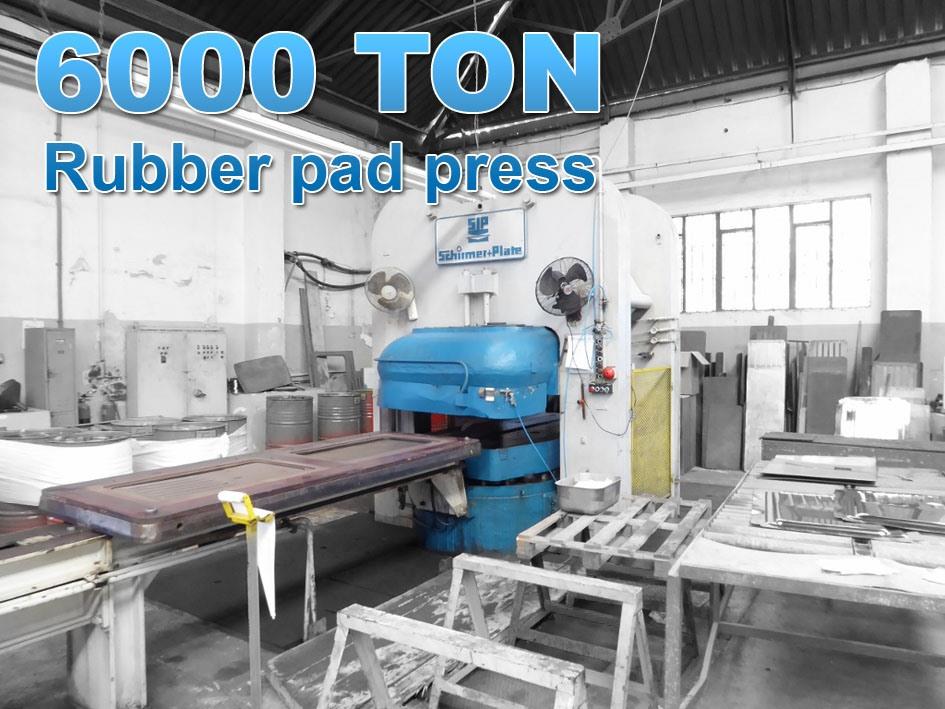
H-frame presses
| Capacity | 6000 ton |
|---|---|
| Passage between uprights | 1000 mm |
| Dimensions of the table | 3000 x 800 mm |
Mobile straightening presses
| Capacity | 6000 ton |
|---|---|
| Max ram adjustment | 250 mm |
| Passage between uprights | 1000 mm |
| Max distance between table -- Ram | 655 mm |
| Dimensions of the table | 3600 x 1000 mm |
| Lenght | 2800 mm |
| Depth | 2300 mm |
| Height | 5000 mm |
Description
Automatic feed in & out table
This type of manufacturing was actually founded back in 1930s. Named the “Guerin process”, this technique used a rubber pad to press sheet metal into a die. By doing this the forming process is simplified and costs are reduced.
At the same time another process was emerging; the “Verson-Wheelon” process where inflatable rubber diaphragms were introduced. This combined with the hydraulic pressure allowed for producing more intricate shapes than the rubber that Guerin could acquire.
This innovation laid the groundwork for modern fluid cell presses, but today elasto forming presses now surpass fluid cell presses because synthetic rubber products offer a greater durability and under pressure will flow like a liquid, delivering exceptional forming results for even the most complex and intricate geometries. And most importantly these results are achieved with seriously reduced tooling costs as opposed to classic hydraulic presses using expensive two part molds.
Request a quote
Fill in the form and our team will contact you within 1 business day.